
Understanding Ammunition Types: FMJ, JHP, and Soft Point Explained
Posted by Liberty Tactical Munitions - Know Your Ammo on Jan 26th 2026
Choosing the right bullet type is just as important as choosing the right caliber or grain weight. Whether you are training at the range, preparing for home defense, or gearing up for hunting season, understanding the differences between FMJ, JHP, and Soft Point bullets will help you pick the right ammo for every situation.
Full Metal Jacket (FMJ)
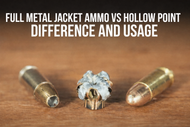
Construction: FMJ bullets feature a lead core fully encased in a harder metal jacket, typically copper. The jacket helps the bullet maintain its shape during firing and prevents the lead from being exposed.
Performance: FMJ rounds are designed NOT to expand when hitting a target. They maintain their shape and tend to penetrate straight through soft targets. This makes them ideal for target practice but less suitable for self-defense due to the risk of over-penetration.
Best Uses: Range training, target practice, and plinking. FMJ ammunition is the most cost-effective option for high-volume shooting, making it the standard choice for practice sessions.
Advantages: Cost-effective, reliable feeding in semi-automatic firearms, reduced barrel fouling, consistent ballistics, widely available.
Disadvantages: Risk of over-penetration, less effective for self-defense, does not create significant wound channels.
Jacketed Hollow Point (JHP)
Construction: JHP bullets have a hollowed-out cavity at the tip covered by a copper jacket. The jacket helps control the bullet's expansion and prevents fragmentation.
Performance: When a JHP strikes a soft target, the hollow point causes the bullet to expand or 'mushroom.' This expansion creates a larger wound channel while slowing the bullet, reducing the risk of over-penetration. The energy transfer upon expansion makes JHP rounds more effective at stopping threats quickly.
Best Uses: Self-defense, home defense, concealed carry, and law enforcement applications. JHP is the gold standard for defensive ammunition.
Advantages: Superior stopping power, reduced over-penetration risk, larger wound channel, effective energy transfer, reliable expansion with quality brands.
Disadvantages: More expensive than FMJ, some firearms may have feeding issues with the hollow point shape (though modern firearms are usually designed to handle them).
Soft Point (SP)
Construction: Soft Point bullets have an exposed lead tip while the rear remains jacketed. This design allows for controlled, slower expansion compared to JHP.
Performance: The exposed lead tip initiates controlled expansion upon impact, but the partial jacket ensures deeper penetration than JHP rounds. SP bullets deform when they impact hard targets, more slowly and in a more controlled manner than hollow points.
Best Uses: Hunting medium to large game where deeper penetration is required. Excellent for deer, hogs, and similar game animals.
Advantages: Better penetration than JHP while still providing expansion, ideal for hunting applications, less likely to over-penetrate than FMJ.
Disadvantages: More expensive than FMJ, may not be as widely available in some calibers.
Quick Reference Guide
For Target Practice/Training: FMJ - affordable and reliable
For Self-Defense/Home Defense: JHP - maximum stopping power, reduced over-penetration
For Hunting: Soft Point or premium JHP - controlled expansion with adequate penetration
Other Bullet Types You May Encounter
TMJ (Total Metal Jacket): Similar to FMJ but with the jacket also covering the bullet's base, reducing lead exposure at indoor ranges.
FMJBT (Full Metal Jacket Boat Tail): FMJ with a tapered base for improved accuracy at longer ranges.
+P and +P+ Ammunition: Higher pressure loads that produce greater velocity and energy. Check your firearm's manual before using.
Sources
- Ammunition Depot: https://www.ammunitiondepot.com
- Liberty Safe: https://www.libertysafe.com
- com: https://ammo.com
- Concealed Nation: https://concealednation.org